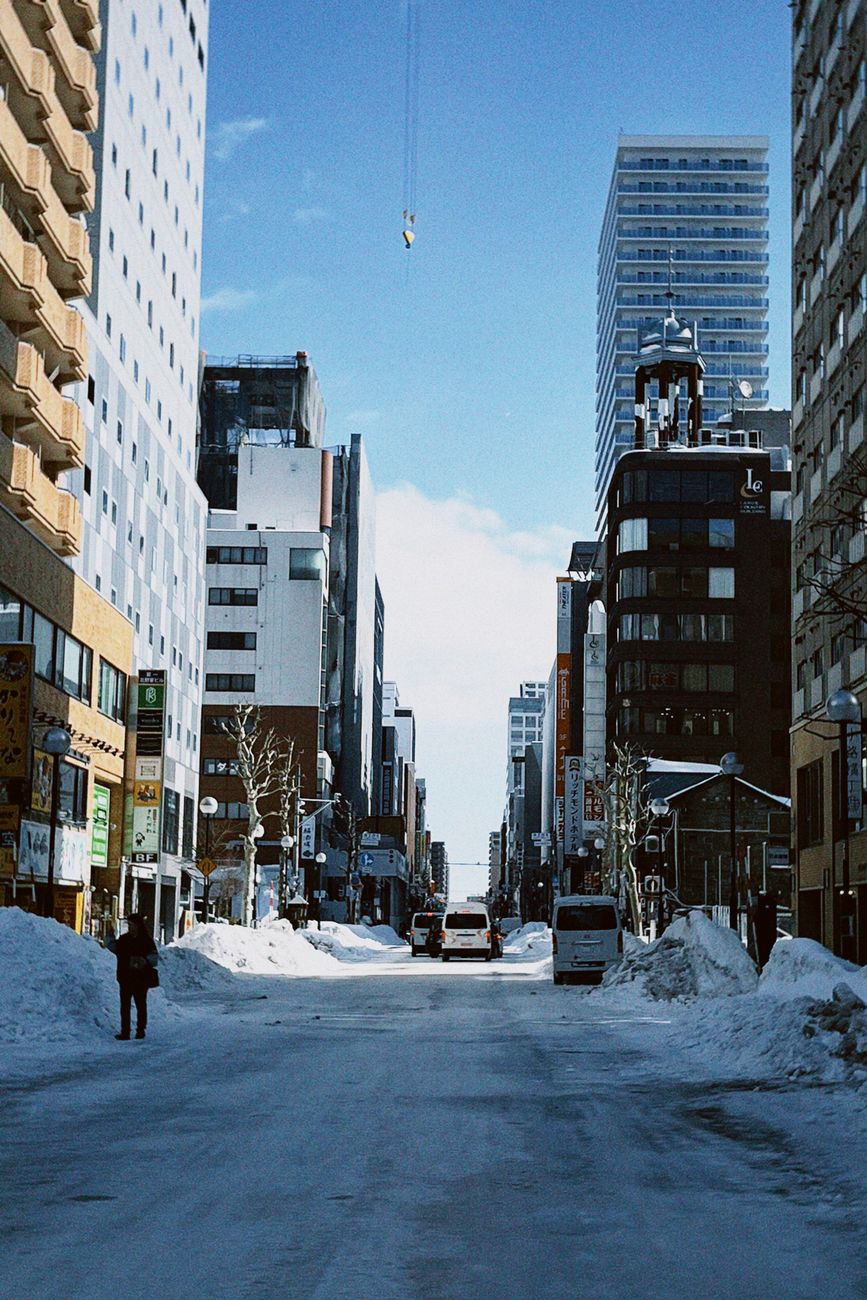
For most first-time visitors to Sapporo, the best area to stay depends on how you plan to travel. Sapporo Station is especially convenient if you’re arriving with luggage, traveling with young children, or want to minimize outdoor walking in winter. Odori is a strong all-round choice for sightseeing and subway access, while Susukino works particularly well if restaurants and nightlife are a priority.
In winter, however, there is one more factor that matters: the actual route between the station and your hotel.
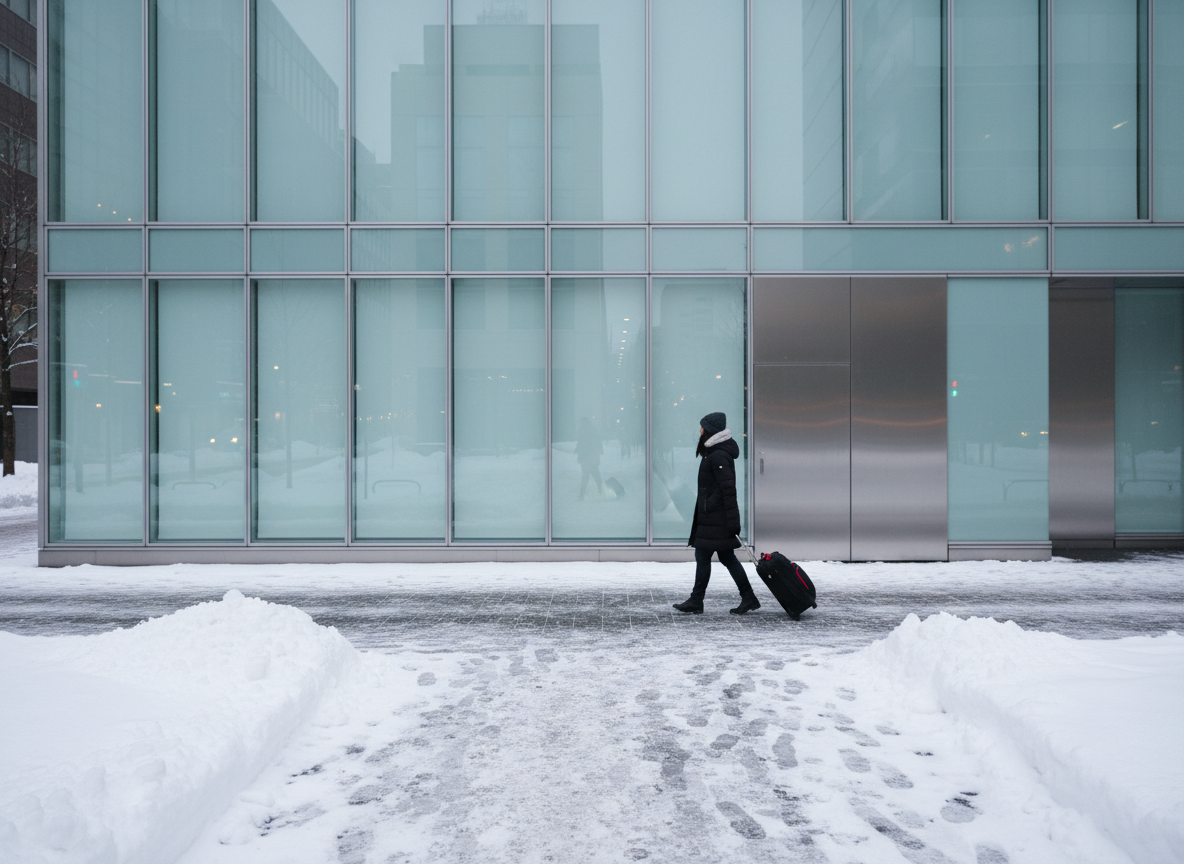
A hotel that looks only five minutes away on a map can feel very different when you are pulling a suitcase over snow, walking on an icy sidewalk, or trying to find an elevator from an underground walkway.
Quick comparison
| Area | Best for | Why choose it? |
|---|---|---|
| Sapporo Station | Winter arrivals, families & luggage | Easy JR access and less outdoor walking |
| Odori | First-time sightseeing & families | Central location and access to all 3 subway lines |
| Susukino | Dining & nightlife | Huge choice of restaurants and late-night options |
Sapporo Station
Best for: Winter arrivals, families & luggage
Why choose it? Easy JR access and less outdoor walking
Odori
Best for: First-time sightseeing & families
Why choose it? Central location and access to all 3 subway lines
Susukino
Best for: Dining & nightlife
Why choose it? Huge choice of restaurants and late-night options
Sapporo Station
Sapporo Station is the easiest choice when convenience matters most, particularly when you are arriving with large luggage or traveling with young children in winter.
The biggest advantage is transportation. JR services are immediately accessible, and central Sapporo has an extensive underground pedestrian network. From the Sapporo Station area, you can continue underground toward Odori and Susukino rather than spending the entire journey outdoors.
That becomes much more valuable in winter.
After arriving in Sapporo, getting yourself, your luggage and possibly young children to the hotel can be one of the most tiring parts of the trip. Reducing that first journey can make arrival day considerably easier.
The trade-off is atmosphere.
If having a large choice of restaurants and nightlife immediately around your hotel is a major priority, Odori or Susukino may fit your trip better.
Firsthand note: For a winter trip with small children, I would prioritize Sapporo Station when the goal is simply to make the arrival day as easy as possible. Once your luggage is at the hotel, moving around the city becomes much easier.
Odori
For many first-time visitors, Odori is the most balanced base.
All three Sapporo subway lines — Namboku, Tozai and Toho — can be accessed at Odori Station, which makes it convenient when your itinerary takes you in different directions around the city.
You are also close to Odori Park and within easy reach of both Sapporo Station and Susukino.
For families, Odori can work particularly well when you want a central location without making nightlife the focus of the trip.
The right way to think about Odori may depend on the stage of your trip. Right after arrival, with children and luggage in tow, Sapporo Station is usually the easier option. But once you have dropped your bags at the hotel, Odori becomes a very convenient base for the rest of your stay — this is less a question of which area is “better” and more a question of what you need at that particular moment.
There is one practical issue I would check before booking, especially in winter:
Which station exit will you actually use?
Odori has many exits. The nearest exit on a map is not necessarily the most convenient one if you have luggage, a stroller or small children.
Before booking a hotel, I would check not only the distance from Odori Station but also whether the route you are likely to use has an elevator and how much outdoor walking remains.
Susukino
Choose Susukino if food, restaurants and nightlife are an important part of your Sapporo trip.
The area gives you a wide range of options for dinner and late-night food, and convenience stores and other services are easy to find.
For couples, friends or travelers who expect to spend their evenings eating and drinking around central Sapporo, staying here can be extremely convenient.
For a trip centered on small children or older family members, however, I would personally look at Sapporo Station or Odori first.
Susukino stays busy later into the evening, and the atmosphere becomes more nightlife-oriented than the areas farther north.
If you want to stay south of Odori but prefer somewhere quieter, the area around Nakajima Park may also be worth considering.
Winter changes what “close to the station” means
In summer, a hotel described as a five-minute walk from the station may be exactly that.
In winter, I would look beyond the number of minutes shown on a map.
Snow can make sidewalks uneven, while compacted snow and ice can make walking slower and require more attention.
Then add a suitcase.
Small suitcase wheels do not move through snow the way they do across an airport floor or a dry sidewalk.
The same applies to strollers. A stroller that moves easily on a dry, flat sidewalk can be far harder to push through snow or over icy patches, so a simple walking-time figure does not tell the whole story for families traveling with young children.
So when choosing a hotel for winter, I would check four things:
- Can you reach the hotel mostly underground?
- Which underground or station exit is closest — and does it have an elevator?
- Does the route you plan to use avoid stairs if you are traveling with a stroller, suitcase or someone with limited mobility?
- How much outdoor walking remains between the exit and the hotel entrance?
Those details may matter more than the difference between a hotel listed as three minutes and one listed as six minutes from a station.
Underground access does not always mean direct underground access
Central Sapporo has an excellent underground pedestrian network.
The Sapporo Ekimae-dori Underground Walkway, usually called Chi-Ka-Ho, connects Sapporo Station and Odori Station over approximately 520 meters. Together with the wider underground network, it allows you to travel between JR Sapporo Station and Susukino underground.
Chi-Ka-Ho has 15 entrances and exits in total, of which 6 have an elevator, plus one further exit with elevator-only access. If you are traveling with a stroller, large luggage or someone with limited mobility, it is worth checking in advance which of these elevator-equipped exits is closest to your hotel.
But there is an important distinction:
“Accessible via underground walkways” is not the same as “directly connected to the station.”
Your hotel may still require an outdoor walk after you leave the underground network.
You should also not assume that every exit has an elevator or that underground routes are available 24 hours a day. Chi-Ka-Ho is officially open from 5:45 a.m. to 12:30 a.m. (24:30), so the route you used during the day may not always be available late at night.
If underground access matters to you, check the route all the way from the station to the hotel entrance, rather than stopping at the nearest exit shown on a map.
Traveling with young children in winter
Winter changes the calculation again when you are traveling with babies or young children.
A stroller can still be useful inside stations, shopping centers and other indoor facilities, but I would not plan a winter trip around being able to use it everywhere outdoors.
Snow-covered and uneven sidewalks can make outdoor stroller use much less practical.
If you are arriving with both a stroller and luggage, this is exactly when the first journey from the station to the hotel can feel hardest — so it is worth checking in advance whether your route has an elevator-equipped exit, rather than discovering the problem on arrival day.
A baby carrier can therefore be a useful backup.
For arrival day in particular, I would prioritize getting from the train or airport transportation to the hotel with as little outdoor movement as possible.
After you have dropped off your luggage, you have much more flexibility.
Firsthand note: Local winter life is often organized differently from sightseeing. Families can drive directly to indoor destinations and then use a stroller inside, for example. A visitor walking between hotels, stations and attractions does not always have that option.
That is why advice that works perfectly well inside a shopping center may not work for an entire sightseeing day.
So where should you stay?
Choose Sapporo Station if minimizing travel friction matters most — particularly when arriving with luggage, traveling with young children or visiting in winter.
Choose Odori if you want a balanced base for a first Sapporo trip, with excellent subway access and a central sightseeing location — especially once you’re past the arrival stage and your luggage is already at the hotel.
Choose Susukino if restaurants, bars and being close to the city’s nightlife are a major part of your trip.
But I would not choose an area before choosing a hotel.
The room, breakfast, facilities, atmosphere, price and simply whether you actually like the hotel all matter too.
Moving one subway stop north or south is not necessarily worth giving up a hotel you would enjoy more.
My final winter rule is simple: choose the hotel you like, then check exactly how you will get from the station to its front door.